Everything you need to begin — from choosing materials to making your first sketch of an ancient artifact.
What Is Archaeology Journaling?
Archaeology journaling is the practice of observing and drawing archaeological artifacts — pottery sherds, stone tools, metal objects, glass vessels, and more — as a way to deeply understand the material culture of the past. It borrows from the traditions of scientific illustration, nature journaling, and field sketching.
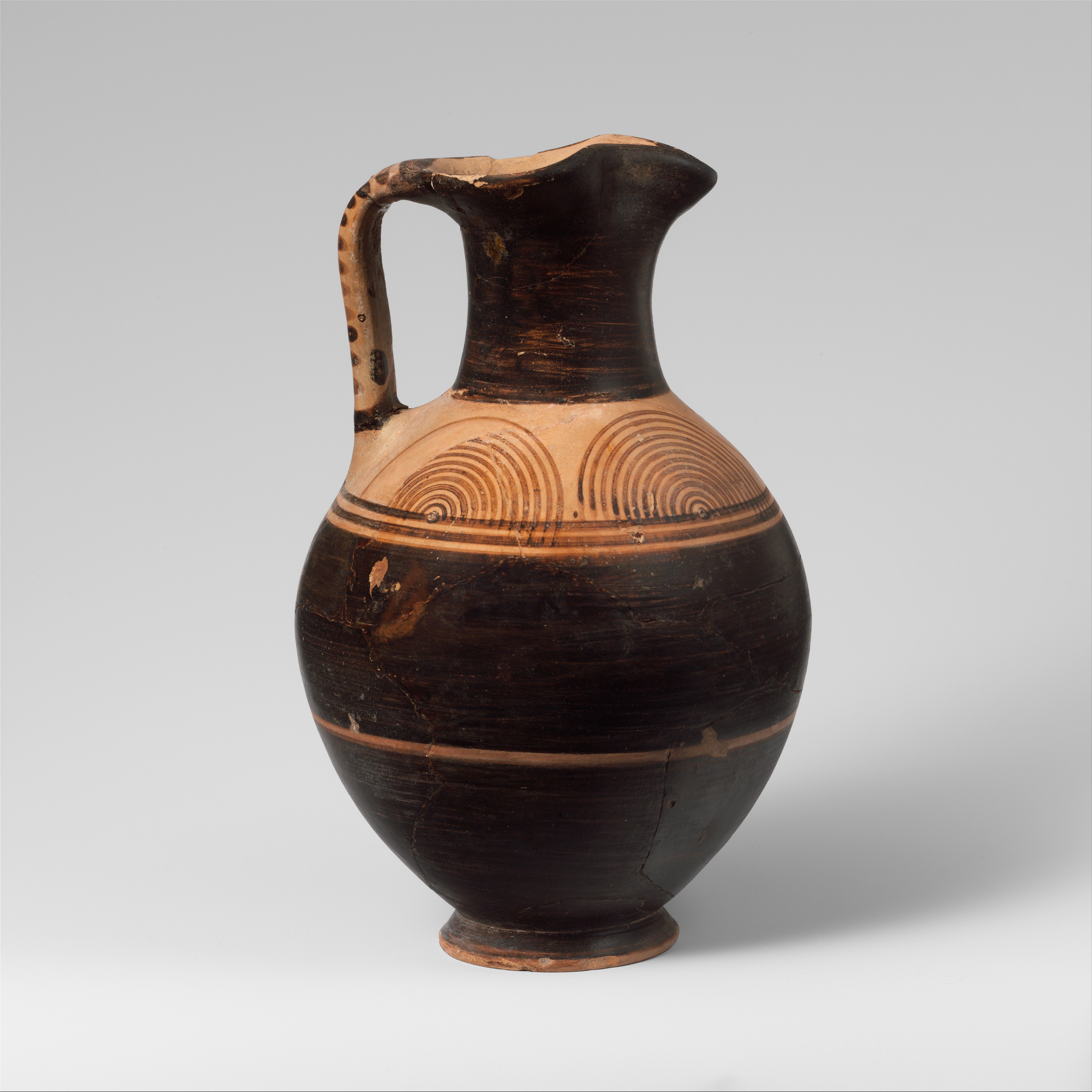
A terracotta kylix from The Met's collection — simple forms like this are ideal starting subjects
Unlike photography, which captures a moment in a click, drawing forces you to look at an object for an extended period. You notice the texture of a surface, the way light catches an edge, the subtle asymmetry of something hand-made thousands of years ago. This slow observation is what makes journaling so rewarding.
Note
You don't need to be a "good artist" to start archaeology journaling. The goal
isn't perfection — it's observation. Every line you draw teaches you something
about the object.
What You Need
The beauty of this practice is its simplicity. Here's a minimal kit to get started:
Essential
A sketchbook — Any size works, but A5 (roughly 5.8 × 8.3 inches) is a great portable option. Look for paper with a slight tooth (texture) that takes pencil well. Moleskine, Stillman & Birn, or a simple hardbound sketch pad all work.
Pencils — A standard HB pencil gets you started. As you progress, try a set ranging from 2H (hard, light lines) to 4B (soft, dark tones). Mechanical pencils (0.5mm) are great for fine detail.
An eraser — A kneaded eraser lets you lift graphite gently without damaging the paper. A vinyl eraser handles heavier corrections.
Nice to Have
Fine-tip pens — Micron pens (0.1mm–0.5mm) in sepia or black for inking over pencil sketches.
A ruler — For scale bars and measured drawings.
A magnifying glass — Incredibly useful for examining surface textures, tool marks, and decorative details on artifacts.
Using This App
This app provides a daily artifact from world museum collections. You can:
Take the daily challenge — draw the featured artifact
Browse the collection — find objects that interest you
Use the image tools — zoom, adjust contrast, and study details
Use the materials guide — learn about the physical properties of different archaeological materials
Start simple
For your first session, pick an artifact with a clear, simple shape — a stone
tool or a plain pottery vessel. Spend 15–20 minutes just looking before you
draw anything. Notice the silhouette, the proportions, the color variations.
Your First Sketch
Here's a simple workflow for your first archaeology journal entry:
An Egyptian stone vessel — notice the smooth curves and symmetry. Start by observing the silhouette.
1. Observe First (5 minutes)
Before picking up your pencil, just look. Ask yourself:
What is the overall shape? Is it symmetrical?
What material is it made from? What does the surface look like?
Are there any distinctive features — handles, decorations, breaks, repairs?
What's the scale? How big would this be in your hand?
2. Block In the Shape (5 minutes)
Use light, loose lines to establish the basic proportions. Don't worry about details — just capture the silhouette. Many archaeological illustrators start with a vertical center line to help with symmetry.
3. Add Structure (10 minutes)
Refine the outline. Add the major features — rims, bases, handles, decoration zones. Start indicating where shadows fall and where the surface changes texture.
4. Develop Tone and Texture (10–15 minutes)
This is where the magic happens. Use hatching, cross-hatching, or stippling to build up the three-dimensional form. Different techniques work for different materials:
Stippling (dots) — excellent for stone and rough surfaces
Hatching (parallel lines) — great for smooth surfaces and metal
Cross-hatching (overlapping line sets) — good for building deep shadows
5. Annotate
Add notes around your drawing: the object's name, date, museum source, material, dimensions, and anything you noticed while drawing. These annotations are what make a journal entry useful — not just a pretty picture.
Archaeological convention
In formal archaeological illustration, objects are typically lit from the
upper left (10 o'clock position). This creates consistent shadow patterns
across different drawings. Try adopting this convention even in your journal —
it'll train your eye.
Building a Practice
Like any skill, archaeology journaling becomes richer with regular practice. Here are some approaches:
Daily challenge — Use this app's daily artifact for a 20-minute warm-up sketch.
Theme weeks — Spend a week drawing only ceramics, or only Bronze Age objects. Focus deepens understanding.
Quick vs. slow — Alternate between 5-minute gesture sketches (capturing energy and form) and 45-minute detailed studies (building technique).
Museum visits — If you can visit a museum in person, bring your journal. Drawing from real objects is a completely different (and wonderful) experience.
The most important thing is to start. Pick up a pencil, open the daily challenge, and make your first mark. Welcome to the field journal.